How soon should I get my roof checked after a hailstorm?
As soon as it is safe. Hail damage is often invisible from the ground, and rain can turn small cracks into leaks. Request a callback to check provider availability, and take photos first.
Request an estimate for storm damage
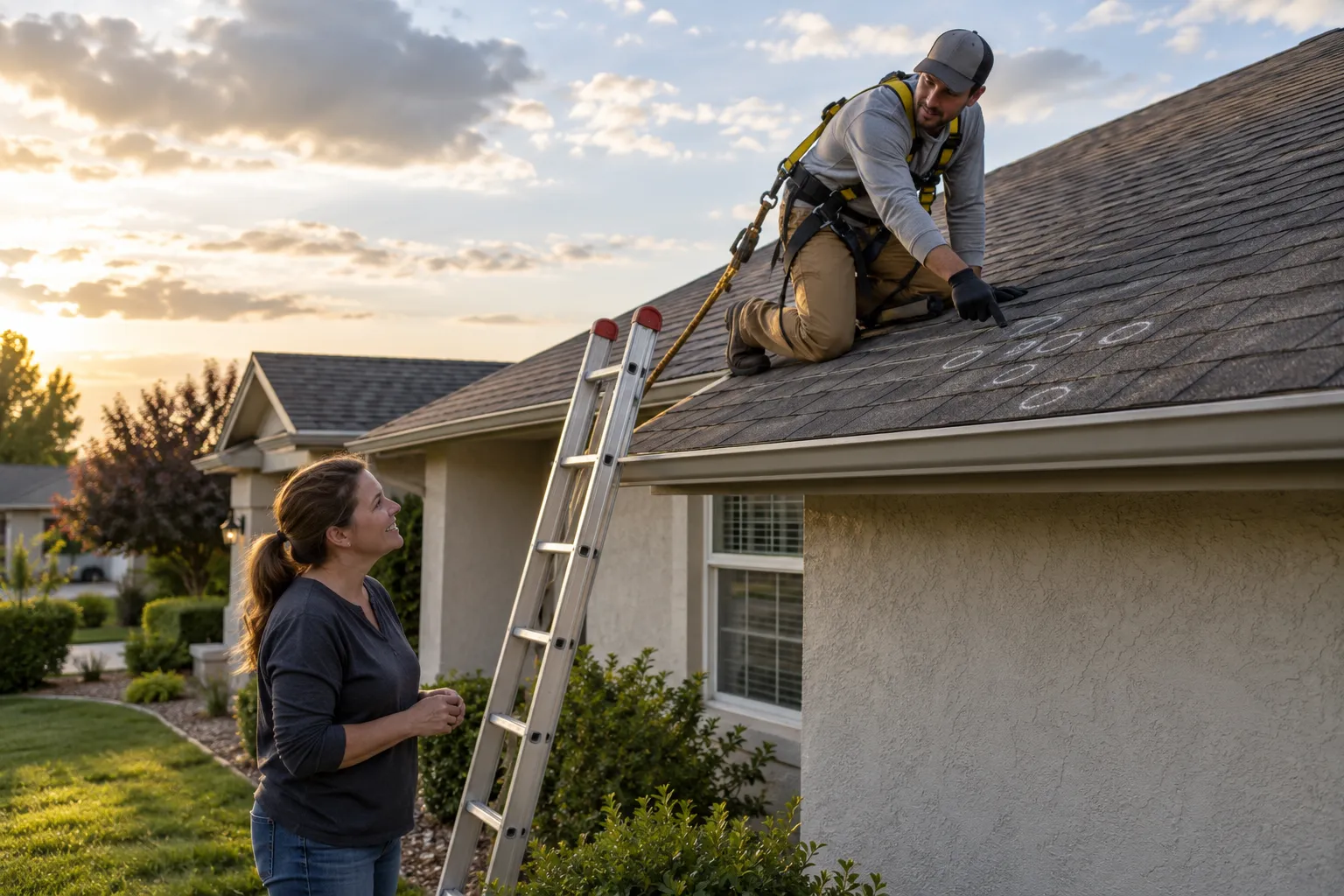
Hail and wind can harm a roof without leaving a single drip on your ceiling. Granules wash away, edges lift, and flashing loosens. Weeks later, the first heavy rain finds the weak spot. That is why a careful look soon after a storm is so useful.
Endingfeed Roofing is a referral service. It does not do the roofing. It connects you with an independent local provider in the San Jacinto area who can inspect the damage, explain what they see, and give you a written estimate. You also get plain-language guidance on your options, from small fixes to a full new roof, so you can decide with a clear head.
Take a breath. You just came through a rough night, and a roof worry on top of it feels heavy. You do not have to sort it all out at once. Start with safety, then take one small step at a time.
Keep your feet on the ground. A wet, battered roof is slippery, and damaged spots can give way under your weight. Leave the climbing to a provider.
If a ceiling is sagging or you smell burning, leave the room and contact your local emergency services.
A roof hurt by hail or wind often looks fine from below. Bruised shingles lose their protective granules. Lifted edges let water slip underneath. Wet insulation holds moisture long after the rain stops.
Where dry seasons run long, the first winter rain event can find every weak spot at once. Stucco ranch homes and older bungalows can hide a slow leak for a while before a stain appears on the ceiling.
Looking early also helps with paperwork. Fresh photos and a dated inspection are far easier to work with than a memory from months ago.
If water is already coming in, say so right away. Request a callback to check provider availability for emergency roof repair or a careful look at the damage.
Storms rarely do just one thing. Here is what providers often find.
Hail leaves dents, cracks and bare patches where granules were knocked loose. On tile it can chip or crack pieces. Metal may show dimples. Many homeowners only learn about it when a neighbor mentions it. When the hits are spread across whole slopes, hail damage roof replacement may come up as an option.
Wind lifts, curls or tears away shingles. It can also loosen flashing around vents and chimneys. Edges and ridge lines usually take the worst of it.
A branch can crack tiles or push through the layers underneath. The surface may look mostly fine while the decking below is hurt.
A provider will usually check the roof surface, flashing, vents, gutters and edges. Many also peek into the attic for damp wood, stains or daylight where there should be none.
Ask for notes on what they found, with photos if possible, and a written estimate. Ask them to point out each problem spot. That way you understand exactly what you are paying for.
Honest answer: it depends. Repair can make sense when damage is limited to a few spots and the rest of the roof is sound. Replacement comes up when damage spreads across much of the roof, when the roof was already old, or when patches would not hold.
Providers in our network can walk you through both paths. Ask for the reasoning behind their advice, not only the price. Know your options first, then choose.
Some policies may cover sudden storm damage, so check your policy for deductibles and filing deadlines. Contact your insurer early and ask how they want damage documented.
Providers can often help document damage for a claim, but your insurance company makes the final decision. Keep your photos, receipts and written estimates in one folder. Do not sign anything you do not understand.
After a big storm, strangers may knock and offer a quick inspection. Some are honest. Some are not. You are allowed to say, "Let me think about it."
A provider who is fine with you taking a day to decide is usually a good sign.
Keep a short list handy when you talk with any provider.
You have already done the hard part by reading this far. Take photos, stay safe, and start with one conversation. A local provider can tell you what is going on up there and what choices you have.
A local provider checks shingles, flashing, vents and gutters, then explains what the storm actually did.
Dents, bruises and bare spots get pointed out so you can see them.
Lifted, curled or missing pieces and loose flashing are noted along the edges.
You receive clear estimates for repair or replacement, so you can compare the choices calmly.
Prices change with roof size, material, pitch and how much damage there is. These are typical U.S. ranges, not quotes. Always ask for a written estimate that lists exactly what is included.
| Item | Typical range | Notes |
|---|---|---|
| Roof inspection after a storm | $150 – $500 | Often depends on roof size and access |
| Emergency tarping | $300 – $1,000 | Temporary cover until repairs can start |
| Minor shingle or tile repair | $300 – $1,500 | A few damaged spots on a sound roof |
| Larger section repair | $1,000 – $4,000 | Wider hail or wind damage on one slope |
| Flashing, vent or gutter fixes | $300 – $2,000 | Often found during the inspection |
| Full asphalt shingle replacement | $8,000 – $20,000 | Varies by size, layers and decking repairs |
Keep off the roof, avoid downed lines, and take photos from the ground.
Request a callback or send the request form to be connected with a provider.
The provider checks the damage, explains findings, and gives you a written estimate.
Compare repair and replacement, check your insurance policy, and decide at your own pace.
Skip the long search. Reach an independent local provider while the damage is still small.
You learn the difference between repair and replacement before anyone starts work.
Questions about estimates, materials and next steps get simple, honest explanations without pressure.
Providers in our network know the area's dry seasons, winter rains and common home styles.
Have a roof question? Request a callback to check provider availability, or send a request and a local provider will follow up. No obligation.
As soon as it is safe. Hail damage is often invisible from the ground, and rain can turn small cracks into leaks. Request a callback to check provider availability, and take photos first.
Some policies may cover sudden storm damage, but terms and deductibles differ. Check your policy and contact your insurer early. Providers can often help document damage for a claim, though the insurer decides.
It depends on how widespread the damage is and how old the roof was. A few damaged spots may be repairable. Broad hail damage often points toward replacement. Ask for a written estimate for each option.
Have a roof question? Request a callback to check provider availability, or send a request and a local provider will follow up. No obligation.
No obligation