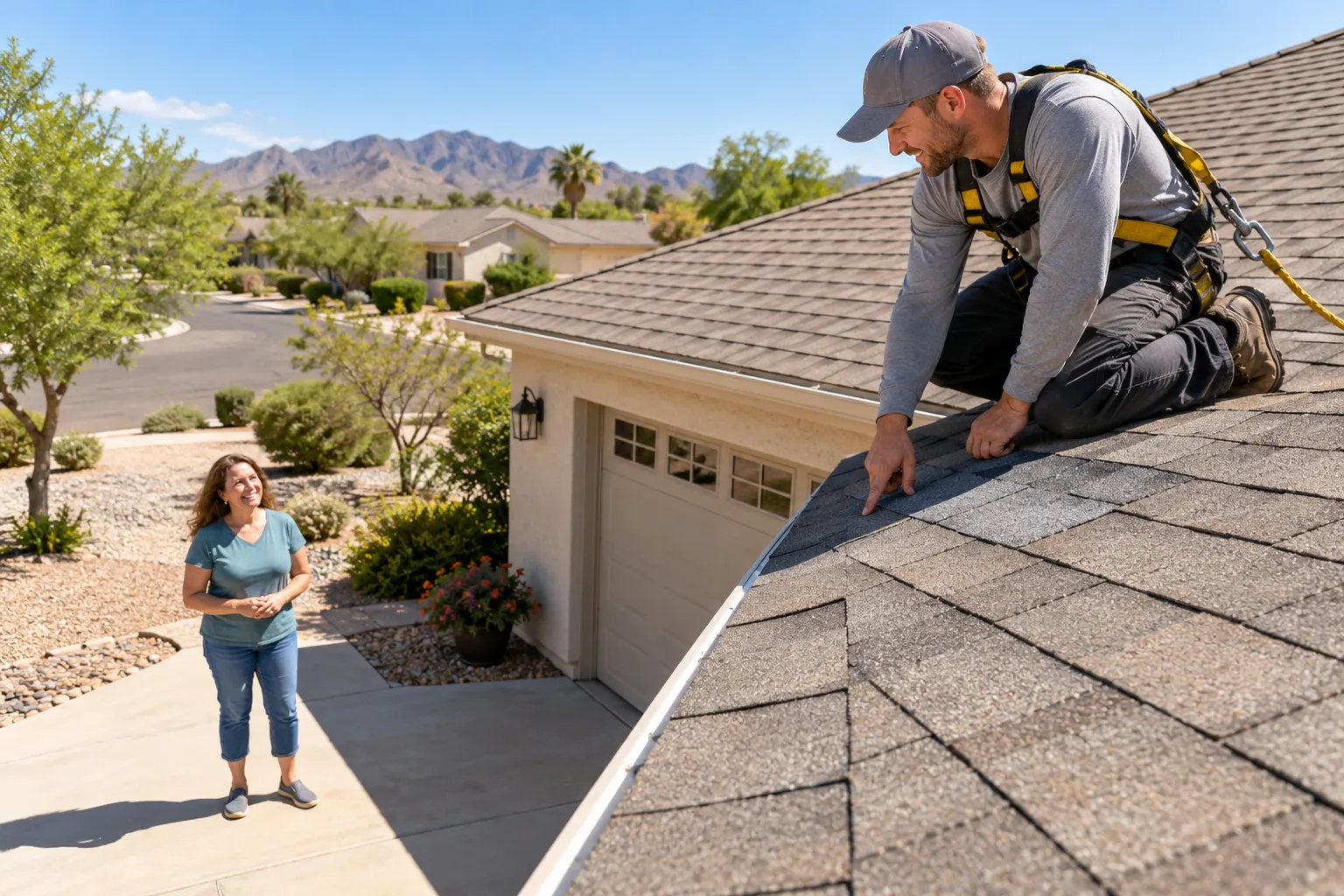
A roof problem rarely feels small when you are staring at a brown spot on the ceiling. The good news is that many leaks start small. A cracked seal, a lifted shingle or a worn patch of flashing can often be handled before it spreads.
Endingfeed Roofing is a referral service. The roofing itself is done by independent providers, not by us. We connect you with a local provider in the San Jacinto area, so you spend less time searching and more time getting answers. The provider inspects the roof, explains what they see and gives you a written quote. You decide what happens next, with no pressure and no obligation.
Use this site to learn the basics first. You will find plain tips on temporary fixes, common repairs, storm damage and the repair-or-replace question, so you feel ready when the provider arrives.
Spotted a Leak? Start Here
First, breathe. A leak feels urgent, and it is worth acting on, but you do not have to figure it all out tonight. Start with one conversation.
Move anything valuable out of the drip zone. Put a bucket under the water. Take a few photos of the stain or the damage. Then reach out to a provider while the problem is still small.
Request a callback to check provider availability in your area.
Get an Estimate
Why Small Leaks Grow
Water is patient. It follows the path of least resistance, and that path is often not where the stain shows up. A drip in the hallway may start a few feet away, under a lifted shingle.
Over time, damp wood can soften. Insulation can hold water and lose its value. Mold can start in places you cannot see. A repair that might have been simple can turn into a bigger job.
What to Do Before Anyone Arrives
A few simple steps can limit the mess while you wait:
- Catch drips with a bucket or a wide pan.
- Move furniture and rugs out of the way.
- Poke a small hole in a sagging, water-filled bulge so it can drain into a bucket, only if it is safe to stand beneath it.
- Stay off the roof. Wet surfaces are slippery.
These are only stopgaps. They buy you time, nothing more.
Emergency Roof Repair, Explained
When people search for emergency roof repair, they usually mean active water coming in, a tree limb on the roof, or a large section torn loose. Many providers can respond quickly to urgent situations, though availability varies.
An urgent visit is often about protection first. The provider may cover the opening with a sturdy temporary tarp or panel. The lasting repair comes after the weather clears and the roof has been looked over properly.
Common Roof Repairs
Most repair jobs fall into a few familiar groups:
- Replacing cracked, curled or missing shingles or tiles
- Resealing or replacing flashing around chimneys, vents and skylights
- Fixing worn pipe boots, which are the rubber collars around vent pipes
- Patching small holes and punctures
- Clearing and repairing gutters that let water back up under the edge
Each one is a small fix on its own. Left alone, each can open the door to a larger one.
How a Provider Finds the Leak
A good inspection looks at more than the stain. The provider checks the attic for damp wood, dark streaks and daylight where it does not belong. Then they walk the roof, or use a ladder or drone, to look at flashing, seals and the surface.
Sometimes they use a hose to test one section at a time. It is slow work, and it is how a hidden source gets found. Ask them to show you photos of what they find.
Storm Damage Repair After the Rain
Winter rain events can test a roof that has baked through a long dry season. Wind can lift edges. Debris can crack tile or dent metal.
For storm damage repair, walk around the outside when it is safe. Look for shingles on the lawn, bent gutters or dark patches on the ceiling. Photos help later if you file a claim. Some policies may cover sudden damage, so check your policy. Providers can often help document damage for a claim.
Repair or Replace?
This is the question behind most roof calls. A repair often makes sense when the damage is limited and the rest of the roof is sound. Replacement is worth a look when the roof is near the end of its life, leaks keep returning in different spots, or damage covers large areas.
A fair provider will explain both paths and show you why. Know your options first, then choose what fits your home and budget.
Get an Estimate
Repairs on Different Roof Types
Asphalt shingles
These are common on tract homes built from the 1950s through the 1980s. Repairs are often quick, but older shingles can turn brittle, which makes matching and patching harder.
Tile and stucco-style homes
Broken tiles can be swapped one at a time. The layer underneath, called underlayment, is what really keeps water out, so ask the provider to check it too.
Flat and low-slope sections
Older bungalows and ranch additions often have these. Ponding water, cracked seams and worn coatings are the usual trouble spots.
Dry Seasons, Smoke and Sun
Long dry stretches bake roofing materials. Ash and smoke seasons leave debris that can clog gutters and valleys. Mild coastal air is gentler, but salt and damp still take a toll. A check before the rains arrive is a calm, sensible habit.
Choosing Local Roofing Contractors
Local roofing contractors know the weather, the building rules and the common problems in your part of the area. Ask each provider a few plain questions:
- Are you licensed and insured in my state?
- Can I have the quote in writing?
- Who does the work, and who stands behind it?
- What happens if you find more damage once you open things up?
Providers in our network are independent. Verify license and insurance details directly with whoever you choose.
Ready When You Are
You do not have to solve this alone. Tell us what you are seeing, and we will point you toward a local provider who can take a look.
Get an Estimate
What's Included
Leak Source Inspection
A provider checks the attic, flashing and roof surface to find where the water is really getting in.
Shingle Repairs
Cracked, curled or missing shingles and tiles are replaced and sealed.
Flashing and Seals
Worn flashing, vent boots and sealants around chimneys and skylights are repaired or replaced to keep water out.
Written Repair Quote
You receive a clear written quote explaining the repair, the materials and any other issues the provider spotted.
Typical Roof Repair Costs
Roof repair prices vary with roof type, height, materials and how much damage there is. These are typical U.S. ranges only. Always get a written quote from the provider before work begins.
| Repair item | Typical range | Notes |
|---|
| Replace a few shingles | $150 – $500 | Cost rises on steep or hard-to-reach roofs. |
| Pipe boot or vent seal | $150 – $450 | Common cause of small leaks. |
| Flashing repair | $250 – $900 | Chimneys and skylights take longer. |
| Tile repair | $300 – $1,200 | Depends on tile matching and underlayment. |
| Flat roof patch or seam repair | $300 – $1,500 | Larger ponding areas cost more. |
| Storm damage section repair | $500 – $3,500 | Varies with the extent of damage. |
Get an Estimate
How It Works
Share What You See
Tell us about the leak, stain or damage so we can point you to a fitting provider.
Talk With a Provider
A local provider asks a few questions and checks availability for an inspection.
Get an Inspection
The provider looks at the roof and attic, then explains what they found.
Review Your Quote
You get a written quote and options, then decide whether to go ahead.
Why Call Endingfeed Roofing
Less Searching
Instead of comparing dozens of listings, you reach an independent local provider with a single conversation.
Clear Options
You learn what repair, replacement and temporary fixes involve before work starts.
No Pressure
You request an estimate, ask your questions and decide at your own pace, with no obligation.
Local Providers
Providers in our network work in your area and know its weather and homes.
Other Services